
Best Open Source Coding Agents in 2026: Free, Local & Fully Hackable Harnesses
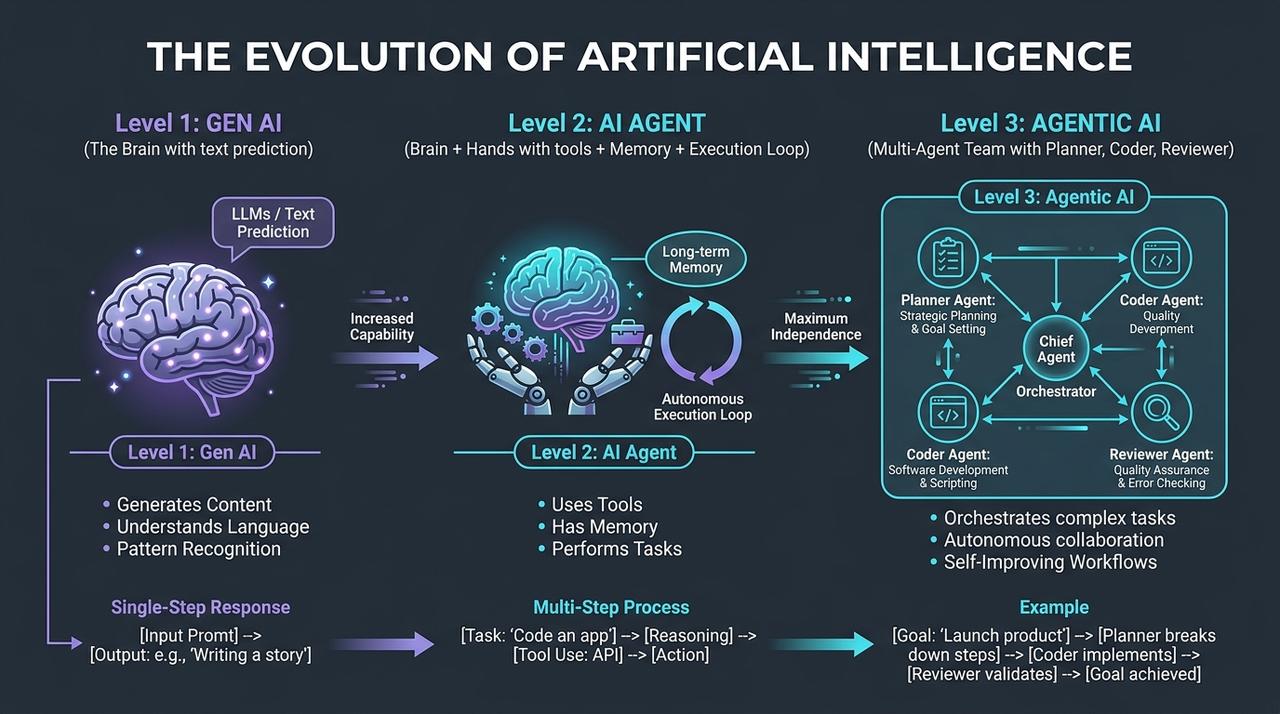
In 2026 the coding-agent market split in two: closed cloud assistants with monthly seat fees, and a fast-growing wave of **open source coding agents** you can run for free, on your own hardware, with full access to the source. This guide ranks the leading open source coding agents and explains why the *harness* — not the model — is what determines whether an agent is safe, deterministic, and cheap to run.
Best Open Source Coding Agents in 2026: Free, Local & Fully Hackable Harnesses: In 2026 the coding-agent market split in two: closed cloud assistants with monthly seat fees, and a fast-growing wave of **open source coding agents** you can run for free, on your own hardware, with full access to the source. This guide ranks the leading open source coding agents and explains why the *harness* — not the model — is what determines whether an agent is safe, deterministic, and cheap to run. Designed as a zero-dependency, open-source TypeScript architecture under the MIT License with native Model Context Protocol (MCP) support and deterministic phase state machines.
- The 2026 shortlist: OpenCode, Cline, Aider, Continue, plus newer harnesses like the DeepSeek harness and Pi agent.
- Why the harness matters more than the model: state machine, tool set, permissions, and context management decide output quality.
- The real cost of closed agents: $20-$50/mo per seat, cloud telemetry, and vendor lock-in across all your prompts and code.
- How to pick: match the agent to your workflow (CLI vs IDE vs embeddable), then verify offline and license terms.
import { createAgent } from 'smoke-monkey-harness';// A 100% free, open source coding agent runtime: no seat fees, no telemetryconst agent = createAgent({provider: 'ollama',model: 'qwen3:8b', // or any frontier API keyworkspacePath: process.cwd(),permissions: { run_command: 'ask', write_file: 'allow' },});await agent.run('Find the failing test, fix the root cause, and re-run the suite');
Watch: Related Video Guides
Anthropic Just Built an Agentic OS — Open Source Harness Breakdown
Smoke Monkey
5 open source tools that replaced my $320/mo AI stack
Fireship
What Makes a Coding Agent "Open Source" in 2026
The label "open source coding agent" gets stretched hard in 2026. There are three layers to check before you commit: the harness (the runtime that plans, calls tools, and loops), the model (which can be local weights or a hosted API), and the license (MIT/Apache vs source-available with restrictions). A truly open agent lets you read and modify the orchestration layer, run it with local models like Qwen3, DeepSeek, or Llama 3, and ship it commercially without paying a seat fee. Agents that hide their loop behind a hosted backend are not open source — they are closed agents with an open client.
Checklist for a Genuinely Open Agent
1) Permissive license (MIT/Apache-2.0). 2) Runs entirely offline with Ollama or another local runtime. 3) Tool execution happens on your machine, not a vendor server. 4) No mandatory account or telemetry phone-home.
The 2026 Open Source Coding Agent Landscape
The category has matured into distinct shapes. CLI agents (OpenCode, Aider, the DeepSeek harness) live in the terminal and excel at large refactors. IDE agents (Cline, Continue, Roo) attach to VS Code for inline diffs and autocomplete. [Embeddable harnesses](/solutions/build-coding-agent-typescript) like Smoke Monkey are libraries you import into your own product, giving you a runtime you can fork and extend. The newest wrinkle is the meta-harness — tools such as Omnigent that orchestrate several agents (Claude Code, Codex, Pi) behind one interface. For teams shipping their own agent product, an embeddable TypeScript harness avoids re-implementing the loop, tools, and permission model from scratch.
Why the Harness Beats the Model for Real Work
It is tempting to judge agents by their model, but in practice the harness architecture dominates outcomes. A strong harness provides a deterministic state machine (Explore → Plan → Edit → Verify → Recover), surgical AST edits instead of whole-file rewrites, context compaction so long sessions stay coherent, and hard permission gates before destructive commands run. Smoke Monkey Harness ships all four as ordinary TypeScript with zero runtime dependencies, so you can audit exactly what your agent will do before you trust it with a repository.
How to Evaluate and Switch Without Regret
Before adopting any open source coding agent, run the same five tasks through it and score the results: (1) fix a failing unit test, (2) upgrade a dependency across N files, (3) add a typed API endpoint, (4) explain an unfamiliar module, and (5) recover from a deliberate compile error. Then check cost under a local Ollama setup versus a hosted model. Smoke Monkey Harness is model-agnostic, so you can repeat the benchmark across Claude, GPT, Gemini, and local weights without changing your tool layer — compare it directly against Claude Code and Cursor before deciding.
import { createAgent } from 'smoke-monkey-harness';for (const model of ['claude-3-7-sonnet', 'gpt-5', 'qwen3:8b']) {const agent = createAgent({ provider: model.includes(':') ? 'ollama' : 'anthropic', model, workspacePath: process.cwd() });const result = await agent.run('Fix the failing test and explain the root cause');console.log(model, result.status, result.iterations);}
Frequently Asked Questions
Q:What is the best open source coding agent in 2026?
There is no single winner. OpenCode and the DeepSeek harness lead for terminal workflows, Cline and Continue lead inside VS Code, and Smoke Monkey Harness leads when you need an embeddable, zero-dependency TypeScript runtime you can ship inside your own product.
Q:Are open source coding agents really free to run?
Yes. The harness and local models are free. You only pay for a frontier API if you choose to use one. Pairing Smoke Monkey Harness with Ollama and Qwen3 or DeepSeek gives you 100% zero-cost, offline execution.
Q:Can an open source coding agent match a paid one?
For most refactoring, testing, and code-generation tasks, yes — the gap is the harness quality, not the license. A good state machine, AST editing, context compaction, and permission gating matter more than a monthly seat fee.
Q:How do I run a coding agent offline?
Install Ollama, pull an open-weights model such as qwen3:8b or deepseek-r1, and point your harness at the local endpoint. Smoke Monkey Harness requires no network access and reads and writes code entirely on your machine.
Related Alternatives & Comparisons
Claude Code Runtime Alternative: Open Source Stdio MCP Agent Harness
Cursor Composer Agent Alternative: Embeddable Code Editing Engine
Open Source Devin Alternative: Build Autonomous Software Engineers in TypeScript
Openai Codex Alternative Open Source: Free Open Source AI Agent & Runtime (2026)
Related Architecture Guides
View all guidesMCP Server Security Best Practices: Hardening Model Context Protocol Agents in 2026
Open Source Coding Agent Harness: Build a Forkable, Local AI Engineering Runtime
Claude Agent Skills Best Practices: Writing SKILL.md Files That Actually Work
Build with Smoke Monkey Harness
Zero dependencies. 24 built-in tools. Human-in-the-loop safety. 100% open source under the MIT License.