
Open Source Agentic OS: What It Is and Why the Harness Wins
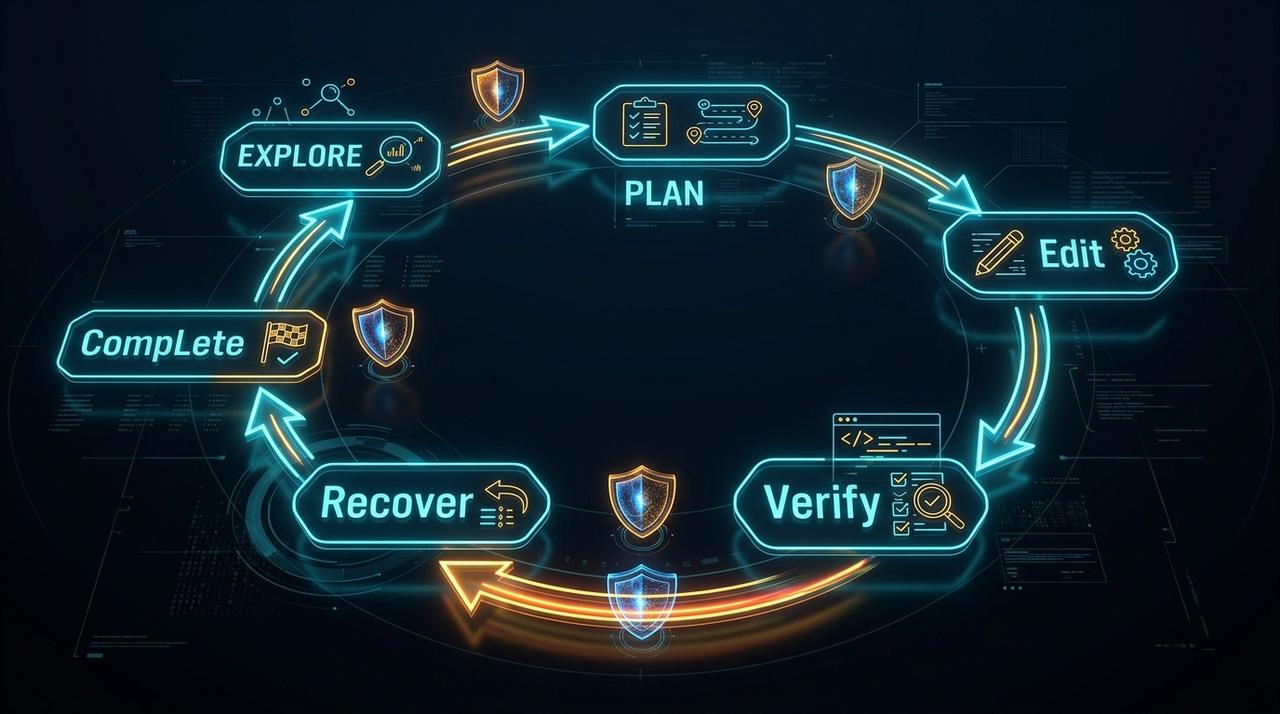
An **agentic OS** is the layer between frontier models and real work: it schedules agents, brokers tools, manages context, and enforces permissions. This guide explains what an agentic OS actually is, why the harness is the kernel, and how Smoke Monkey Harness + Canvas form a fully open-source agentic OS you can fork and self-host.
Open Source Agentic OS: What It Is and Why the Harness Wins: An **agentic OS** is the layer between frontier models and real work: it schedules agents, brokers tools, manages context, and enforces permissions. This guide explains what an agentic OS actually is, why the harness is the kernel, and how Smoke Monkey Harness + Canvas form a fully open-source agentic OS you can fork and self-host. Designed as a zero-dependency, open-source TypeScript architecture under the MIT License with native Model Context Protocol (MCP) support and deterministic phase state machines.
- A chat app streams tokens; an agentic OS runs long-lived agent processes that act on your systems.
- The harness is the kernel: a 6-phase state machine, 24 tools, MCP stdio, and permission gates with zero runtime dependencies.
- Smoke Monkey Canvas is the desktop: an infinite spatial canvas where agent swarms are draggable, observable cards.
- Unlike closed offerings such as Claude Code Projects, an open agentic OS keeps orchestration while removing lock-in.
import { createAgent } from 'smoke-monkey-harness';// The kernel of an open source agentic OS: a deterministic agent runtimeconst agent = createAgent({provider: 'ollama', // local, or any frontier keymodel: 'qwen3:8b',workspacePath: process.cwd(),permissions: {read_file: 'allow',write_file: 'ask',run_command: 'ask',network: 'deny',},});// Runs explore -> plan -> edit -> verify -> recover -> completeconst result = await agent.run('Audit the repo and produce a typed refactor plan');console.log(result.status);
Watch: Related Video Guides
Anthropic Just Built an Agentic OS — Open Source Harness Breakdown
Smoke Monkey
The NEW Agentic OS standard for Claude 5 Models is here (Full Breakdown)
Jay E | RoboNuggets
What Is an Agentic OS, Really?
An agentic OS is the layer between frontier models and real work. It schedules agents, brokers tools, manages context, and enforces permissions. A chat app streams tokens; an agentic OS runs long-lived processes that act — editing files, running commands, calling APIs — and verifies the outcome. The 2026 wave of "agentic OS" announcements describes the same core: a runtime that plans, executes, and self-corrects, plus a surface to observe it. The decisive question is whether that layer is open. Smoke Monkey Harness is a kernel you can read, fork, and self-host.
The Harness Is the Kernel
Every operating system needs a scheduler and a syscall layer. In Smoke Monkey that is the 6-phase state machine — explore → plan → edit → verify → recover → complete — driving 24 built-in tools over an MCP stdio server, all with zero runtime dependencies. It is deterministic, auditable, and provider-agnostic, which is exactly what you want from a kernel: predictable behavior you can reason about before you trust it with a repository.
import { createAgent, createMcpServer } from 'smoke-monkey-harness';// 1. Boot the agent kernelconst agent = createAgent({provider: 'anthropic',model: 'claude-sonnet-5',workspacePath: process.cwd(),permissions: { read_file: 'allow', write_file: 'ask', run_command: 'ask' },});// 2. Expose its tools to any MCP-compatible clientcreateMcpServer({ agent, allowTools: ['read_file', 'write_file', 'run_command', 'run_tests'] });
Canvas Is the Desktop
An OS also needs a shell. Smoke Monkey Canvas is the visual desktop for the harness: an infinite spatial canvas where agent swarms live as draggable cards. Run npx @smoke-monkey/canvas start and you get a local, open-source workspace that orchestrates 300+ MCP tools across many agents at once. Watch agents work on one infinite canvas, branch messages, and approve destructive steps in place. Same kernel, human-friendly surface — the missing control plane for real agentic work.
# Boot the visual desktop of the agentic OSnpx @smoke-monkey/canvas start
Claude Code Projects vs an Open Agentic OS
Claude Code Projects and similar offerings package a strong model with a proprietary orchestration layer. An open agentic OS keeps the orchestration but removes the lock-in: local models work, prompts and memory stay on your disk, and you can embed the runtime inside your own product. You still get the parts that matter — planning, subagents, persistent memory, permission gates — but on infrastructure you control. Compare the trade-offs in the Claude Code runtime alternative and Claude Projects alternative writeups.
Frequently Asked Questions
Q:What is an agentic OS in simple terms?
It is the runtime layer that turns a language model into an acting agent: it schedules work, calls tools, manages context, and enforces permissions. Think of the model as the CPU and the agentic OS as the operating system around it.
Q:Is Smoke Monkey a real operating system?
It is an agentic OS in the product sense, not a hardware OS. Smoke Monkey Harness is the kernel runtime and Smoke Monkey Canvas is the visual desktop, both running as normal Node.js processes.
Q:How is an open agentic OS better than a closed one?
You can audit and modify the orchestration, run fully offline, avoid seat fees and vendor lock-in, and embed the runtime in your own product. You keep the capability without surrendering control.
Q:Does it support multiple model providers?
Yes. Smoke Monkey Harness is model-agnostic and works with Anthropic Claude, OpenAI, Gemini, and local Ollama weights behind one interface, so you are never locked to a single vendor.
Related Alternatives & Comparisons
Claude Code Runtime Alternative: Open Source Stdio MCP Agent Harness
Claude Projects Alternative: Self-Hosted Visual Multi-Agent OS (2026)
Openai Codex Alternative Open Source: Free Open Source AI Agent & Runtime (2026)
Related Architecture Guides
View all guidesBest Open Source Coding Agents in 2026: Free, Local & Fully Hackable Harnesses
MCP Server Security Best Practices: Hardening Model Context Protocol Agents in 2026
Open Source Coding Agent Harness: Build a Forkable, Local AI Engineering Runtime
Build with Smoke Monkey Harness
Zero dependencies. 24 built-in tools. Human-in-the-loop safety. 100% open source under the MIT License.