
Pi Agent Coding Harness: What Makes a Minimal, Hackable Agent Runtime
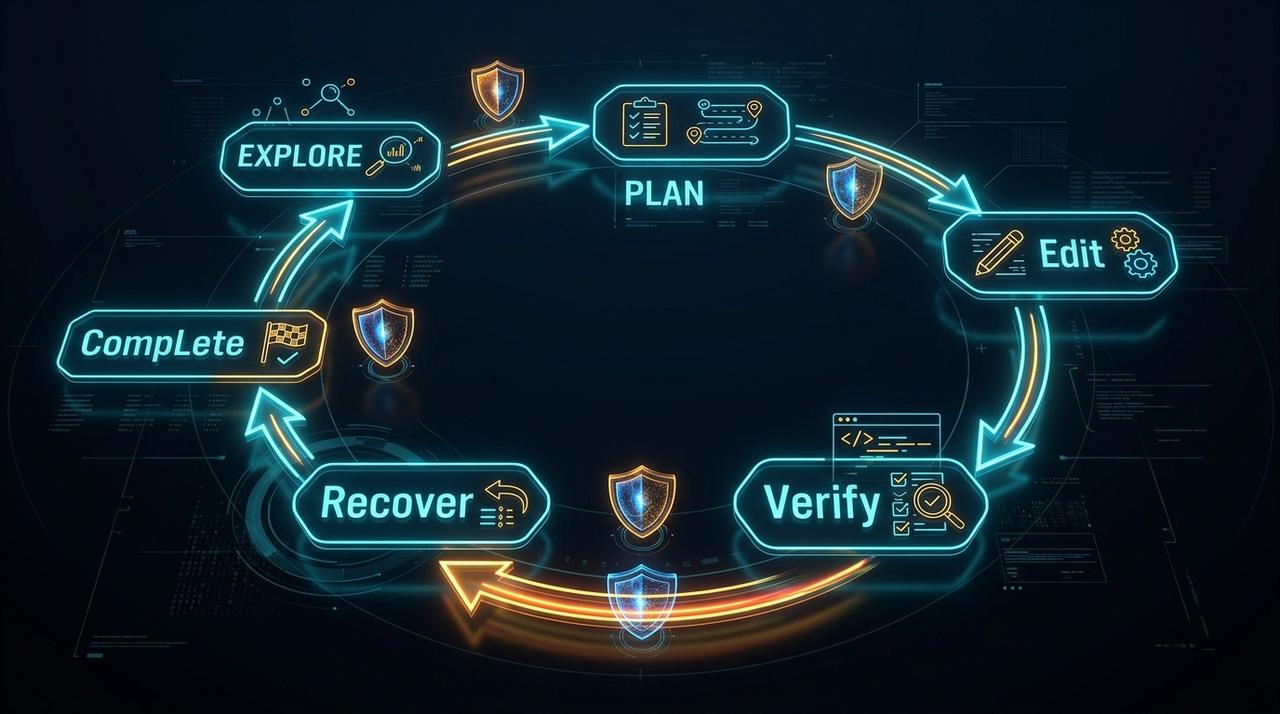
The **Pi agent** made a simple point that most agent frameworks miss: a coding harness should be small enough to read in one sitting. Minimalism is not a limitation — it is a feature, because every line you can audit is a line you can trust with your repository. This guide breaks down what makes a harness minimal and hackable, why that matters for security and debugging, and how [Smoke Monkey Harness](/solutions/what-is-an-ai-agent-harness) delivers the same philosophy as a **zero-dependency TypeScript runtime** you can extend.
Pi Agent Coding Harness: What Makes a Minimal, Hackable Agent Runtime: The **Pi agent** made a simple point that most agent frameworks miss: a coding harness should be small enough to read in one sitting. Minimalism is not a limitation — it is a feature, because every line you can audit is a line you can trust with your repository. This guide breaks down what makes a harness minimal and hackable, why that matters for security and debugging, and how [Smoke Monkey Harness](/solutions/what-is-an-ai-agent-harness) delivers the same philosophy as a **zero-dependency TypeScript runtime** you can extend. Designed as a zero-dependency, open-source TypeScript architecture under the MIT License with native Model Context Protocol (MCP) support and deterministic phase state machines.
- A minimal harness trades framework sprawl for readability: a small loop, a clear tool interface, and explicit state.
- Pi agent popularized the "read it in 17 minutes" benchmark — the point is auditability, not feature count.
- Smoke Monkey Harness keeps the loop tiny and legible while shipping a 6-phase state machine and 24 tools as plain TypeScript.
- Minimal single agents scale into systems with **Smoke Monkey Canvas**, which orchestrates many agents without a heavyweight backend.
import { createAgent } from 'smoke-monkey-harness';// The whole harness is readable TypeScript with zero runtime dependenciesconst agent = createAgent({provider: 'ollama',model: 'qwen3:8b',workspacePath: process.cwd(),maxIterations: 20,});await agent.run('Find the dead code in src/ and remove it safely');
Watch: Related Video Guides
Anthropic Just Built an Agentic OS — Open Source Harness Breakdown
Smoke Monkey
Learn 90% Of Pi Agent in Under 17 Minutes
Brandon Melville
What "Minimal and Hackable" Really Means
Minimal does not mean underpowered. It means the essential parts are separated cleanly: a loop that decides when to continue or stop, a tool interface any function can implement, a state object that is serializable, and a model adapter that hides provider differences. The Pi agent leaned into this by keeping the harness small enough to understand quickly — and that legibility is what lets you debug a bad run instead of guessing. A framework with forty abstractions produces the same token stream but hides the failure; a minimal harness shows you exactly which phase produced the wrong tool call.
The Real Metric
Ask not how many features a harness has, but how long it takes you to trace a single agent turn from input to tool call to result. Minimalism is measured in debuggability.
Why Small Harnesses Are Safer
Every abstraction between your prompt and your filesystem is a place a security bug can hide. A minimal harness with a single tool-dispatch function is easy to review: you can read the gate that decides whether run_command is allowed, confirm that AST-aware edits validate target content before writing, and check that permissions default to ask. Smoke Monkey Harness keeps that surface small by refusing runtime dependencies — no transitive packages to audit, no supply-chain surprises.
import { createAgent, defineTool } from 'smoke-monkey-harness';// Adding a tool is a plain function — no framework ceremonyconst lint = defineTool({name: 'run_lint',description: 'Run the project linter and return the first error',parameters: { type: 'object', properties: { path: { type: 'string' } } },handler: async ({ path }) => ({ output: await runEslint(path) }),});const agent = createAgent({provider: 'ollama',model: 'qwen3:8b',workspacePath: process.cwd(),tools: [lint],permissions: { run_command: 'ask' },});
How Smoke Monkey Harness Relates to Pi Agent
Pi agent and Smoke Monkey Harness share the same instinct: keep the harness small and let the developer own it. Smoke Monkey adds the pieces a minimal demo grows into once it meets production — a 6-phase state machine so runs are deterministic and resumable, an MCP stdio server so editors and other clients can drive the agent, and automatic context compaction so long sessions do not collapse. It stays hackable because none of that is hidden behind a plugin system: it is TypeScript you import with import { createAgent } from 'smoke-monkey-harness'. Where Pi stops at one agent, Smoke Monkey scales to many via multi-agent orchestration.
From One Minimal Agent to a Swarm
The reason minimal harnesses are worth building is that you can run several of them cheaply. One agent explores, another edits, a third verifies — and because each loop is small, coordination stays tractable. That is the design behind Smoke Monkey Canvas, the visual spatial multi-agent OS (npm install @smoke-monkey/canvas, then npx @smoke-monkey/canvas start, shipping 300+ MCP tools). Each agent appears as a node you can watch and pause, so the minimalism you valued in a single harness becomes the reason a swarm stays understandable.
import { createAgent } from 'smoke-monkey-harness';const make = (persona: string) =>createAgent({provider: 'ollama',model: 'qwen3:8b',workspacePath: process.cwd(),systemPrompt: persona,});const planner = make('You produce implementation plans only.');const builder = make('You edit files using surgical chunk replacements.');const plan = await planner.run('Plan a safe rename of UserService to AccountService');await builder.run(plan.summary);
Frequently Asked Questions
Q:Is a minimal harness fast enough for real coding tasks?
A small harness is usually *faster* in practice, because fewer abstractions mean fewer retries and predictable tool calls. Smoke Monkey completes exploration-to-edit loops without a heavyweight framework in the middle.
Q:Does Smoke Monkey Harness have any runtime dependencies?
No. It ships with [zero runtime dependencies](/solutions/zero-dependency-agent-runtime), which keeps the audit surface tiny and the install instant — the same spirit as the Pi agent.
Q:Can I still add my own tools like Pi agent allows?
Yes. Use `defineTool` to register a plain async function; it is added to the same tool registry the built-in 24 tools use, with no plugin loader or build step.
Q:How do I scale a minimal harness to multiple agents?
Run several agents and place them on **Smoke Monkey Canvas** with `npx @smoke-monkey/canvas start`. Canvas gives you a spatial board, 300+ MCP tools, and per-agent controls so many small agents stay manageable.
Related Alternatives & Comparisons
Related Architecture Guides
View all guidesBest Open Source Coding Agents in 2026: Free, Local & Fully Hackable Harnesses
MCP Server Security Best Practices: Hardening Model Context Protocol Agents in 2026
Open Source Coding Agent Harness: Build a Forkable, Local AI Engineering Runtime
Build with Smoke Monkey Harness
Zero dependencies. 24 built-in tools. Human-in-the-loop safety. 100% open source under the MIT License.