
AI Security Code Review Agents: Don't Just Trust AI Code
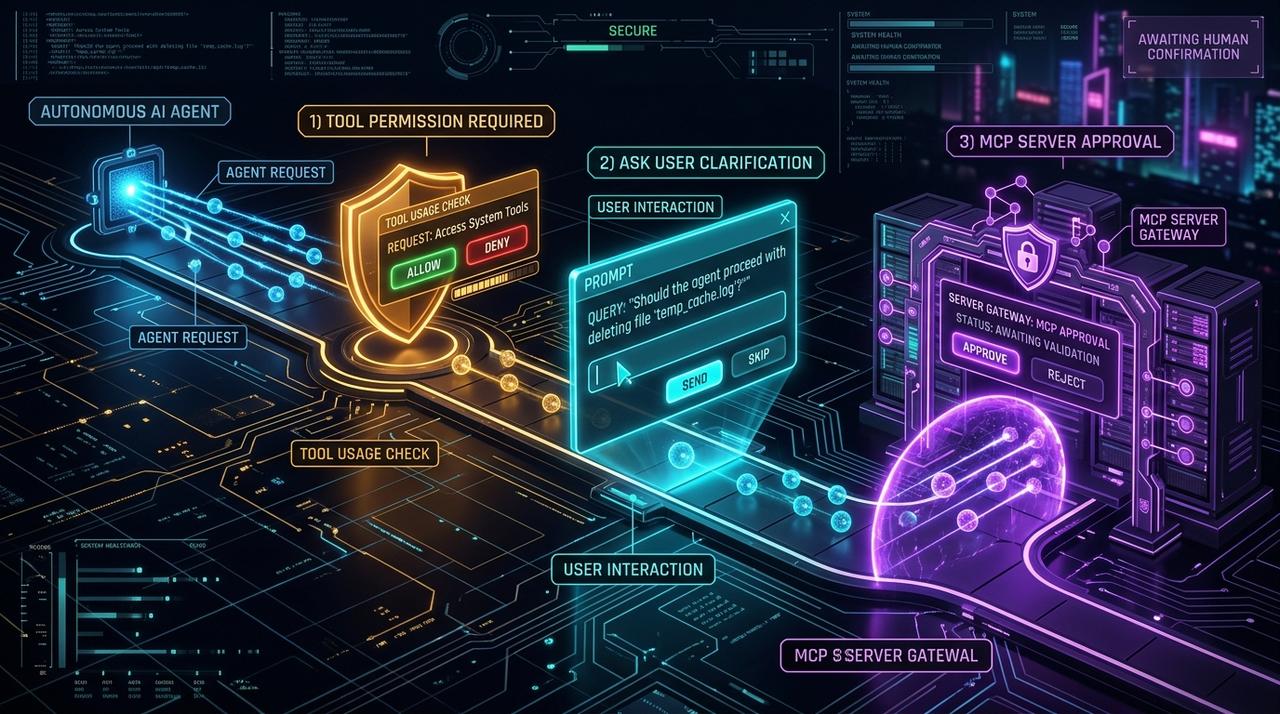
AI now writes more code than any human team can review by hand, and generated code ships its own class of vulnerabilities. Tools like **Qodo** and **Endor** turned AI code review into a category — but review is only half the loop. This guide shows how to pair review agents with automated verification in [Smoke Monkey Harness](/solutions/what-is-an-ai-agent-harness), and how **Smoke Monkey Canvas** lets you watch a review fleet work a change set before anything merges.
AI Security Code Review Agents: Don't Just Trust AI Code: AI now writes more code than any human team can review by hand, and generated code ships its own class of vulnerabilities. Tools like **Qodo** and **Endor** turned AI code review into a category — but review is only half the loop. This guide shows how to pair review agents with automated verification in [Smoke Monkey Harness](/solutions/what-is-an-ai-agent-harness), and how **Smoke Monkey Canvas** lets you watch a review fleet work a change set before anything merges. Designed as a zero-dependency, open-source TypeScript architecture under the MIT License with native Model Context Protocol (MCP) support and deterministic phase state machines.
- AI-generated code needs its own review pass: models repeat insecure patterns they learned.
- A review agent should be a separate identity with read-only access and an independent verdict.
- Smoke Monkey Harness couples review gates to the automated test verification loop so nothing merges unproven.
- Smoke Monkey Canvas displays every reviewer, finding, and gate decision on one board.
import { createAgent } from 'smoke-monkey-harness';// A read-only reviewer: it judges code but cannot change itconst reviewer = createAgent({provider: 'anthropic',model: 'claude-opus-5',workspacePath: process.cwd(),identity: { principal: 'agent://security-reviewer' },permissions: {read_file: 'allow',run_command: 'allow', // run tests and scannerswrite_file: 'deny', // cannot silently "fix" what it reviews},});const report = await reviewer.run('Review the working tree for auth, injection, and secret-leak issues. List findings with severity.');console.log(report.output);
Watch: Related Video Guides
Anthropic Just Built an Agentic OS — Open Source Harness Breakdown
Smoke Monkey
How to Actually Review AI Code (Don't Just Trust It)
Tech With Tim
Why AI-Generated Code Needs a Dedicated Review Pass
Language models are trained on a large body of code that includes insecure patterns, and they reproduce those patterns with confidence. That is how generated-code CVEs happen: a plausible-looking query built by string concatenation, a hardcoded secret in a "quick example", a missing authorization check on a new route. Human review was never sized for AI throughput, so the review step has to become automated. The 2026 tooling wave — Qodo, Endor, and others — proves the demand. The right architecture pairs a review agent with real verification, which is exactly what Smoke Monkey Harness does, all visible on Smoke Monkey Canvas.
Trust is not a review strategy
A review agent that can also edit the code will sometimes "resolve" a finding by hiding it. Separate the reviewer identity from the writer so the verdict stays independent.
Review Agents Belong in Their Own Identity
The security of a review depends on the reviewer being independent. Give the review agent a read-only identity: it can read files and run tests, but it cannot write. In Smoke Monkey that is a permissions block — read_file: 'allow', run_command: 'allow', write_file: 'deny'. Now a finding cannot be quietly patched away, and every reviewer action is attributable to its principal in the audit log. This is the same least-privilege discipline you would apply to any non-human identity in your stack. Assign that identity per card on Smoke Monkey Canvas so no reviewer ever runs broader than its scope.
import { createAgent, defineTool } from 'smoke-monkey-harness';// A gate that only opens when review AND tests both passconst reviewGate = defineTool({name: 'review_gate',description: 'Block merges until the reviewer and the test suite both approve',parameters: { type: 'object', properties: { diff: { type: 'string' } } },handler: async ({ diff }) => {const findings = await securityScanner.scan(diff);const tests = await runTestSuite();const ok = findings.critical === 0 && tests.passed;return { output: ok ? 'GATE_OPEN' : 'GATE_BLOCKED', findings, tests };},});const agent = createAgent({provider: 'anthropic',model: 'claude-opus-5',workspacePath: process.cwd(),tools: [reviewGate],});
Coupling Review to the Automated Test Verification Loop
Static review catches patterns; tests catch behavior. A serious pipeline needs both, so the review agent should block on the automated test verification loop — no green tests, no merge. Smoke Monkey Harness runs the loop itself: the agent edits, the runtime executes the suite, and failure routes back through the recover phase instead of pretending success. Add a second verifier with a different model for high-risk changes and you have defense in depth without a human reading every diff. Run the reviewers side by side on Smoke Monkey Canvas and the disagreements surface visibly.
import { createAgent } from 'smoke-monkey-harness';// Two independent reviewers: a cheap model for breadth, a frontier model for riskconst reviewers = [createAgent({ provider: 'anthropic', model: 'claude-haiku-5', workspacePath: process.cwd(), permissions: { write_file: 'deny' } }),createAgent({ provider: 'anthropic', model: 'claude-opus-5', workspacePath: process.cwd(), permissions: { write_file: 'deny' } }),];const verdicts = await Promise.all(reviewers.map((r) => r.run('Flag security and correctness issues in the staged diff.')));// Merge only when both independent reviewers clear the changeif (verdicts.some((v) => /critical/i.test(v.output))) throw new Error('Blocked by review agent');
A Review Fleet on the Canvas
When review runs at AI speed, you need a control surface, not a terminal scroll. Smoke Monkey Canvas (npx @smoke-monkey/canvas start) lays out a whole review fleet on one infinite canvas: an explorer to map the diff, a security reviewer, a performance reviewer, and a verifier — each a card with live findings. Approve or reject gates inline, and because Canvas shares the harness runtime, 300+ MCP tools like linters, SAST scanners, and secret detectors plug straight in. It is the fastest way to see *why* a change set is blocked before it reaches main. Related: AST-aware code editing and TypeScript agent testing. Every reviewer there runs on Smoke Monkey Harness, so findings, tools, and gates stay consistent.
Frequently Asked Questions
Q:Can AI code review agents be trusted on their own?
No single reviewer should be the only gate. Use a dedicated review identity plus automated tests and, for risky changes, a second independent verifier. Smoke Monkey Harness lets you compose all three in one loop.
Q:Why give a review agent read-only permissions?
A reviewer that can also edit can "fix" a finding by hiding it. Read-only review identities keep the verdict independent and make every action attributable in the audit log.
Q:How is this different from a linter or SAST tool?
Linters and SAST scanners are tools an agent calls; they are not the whole review. Smoke Monkey plugs them in via MCP and adds reasoning, cross-file context, and a merge gate tied to passing tests.
Q:Can I watch a fleet of review agents work?
Yes. Smoke Monkey Canvas shows each reviewer as a card with live findings on one infinite canvas, and lets you approve or block gates inline before a change reaches main.
Related Alternatives & Comparisons
Related Architecture Guides
View all guidesBest Open Source Coding Agents in 2026: Free, Local & Fully Hackable Harnesses
MCP Server Security Best Practices: Hardening Model Context Protocol Agents in 2026
Open Source Coding Agent Harness: Build a Forkable, Local AI Engineering Runtime
Build with Smoke Monkey Harness
Zero dependencies. 24 built-in tools. Human-in-the-loop safety. 100% open source under the MIT License.